
Welcome to
Notes from the nest
— where organization meets artistry and calm feels curated, not clinical. Here, you’ll find thoughtful guides, pro organizing tips, and inspired decluttering ideas designed to help you live beautifully and intentionally.
Whether you’re tackling a single closet, editing your home office, or reimagining your entire space, we’ll share elegant, practical ways to simplify your surroundings and elevate your everyday life.
Because at P.S. Nest, we believe every home tells a story — and it deserves to be organized with care, creativity, and heart.
P.S. This is where we will also share how what we are playing, creating, and reading, with friends both old and new, adds meaning and joy to our lives.
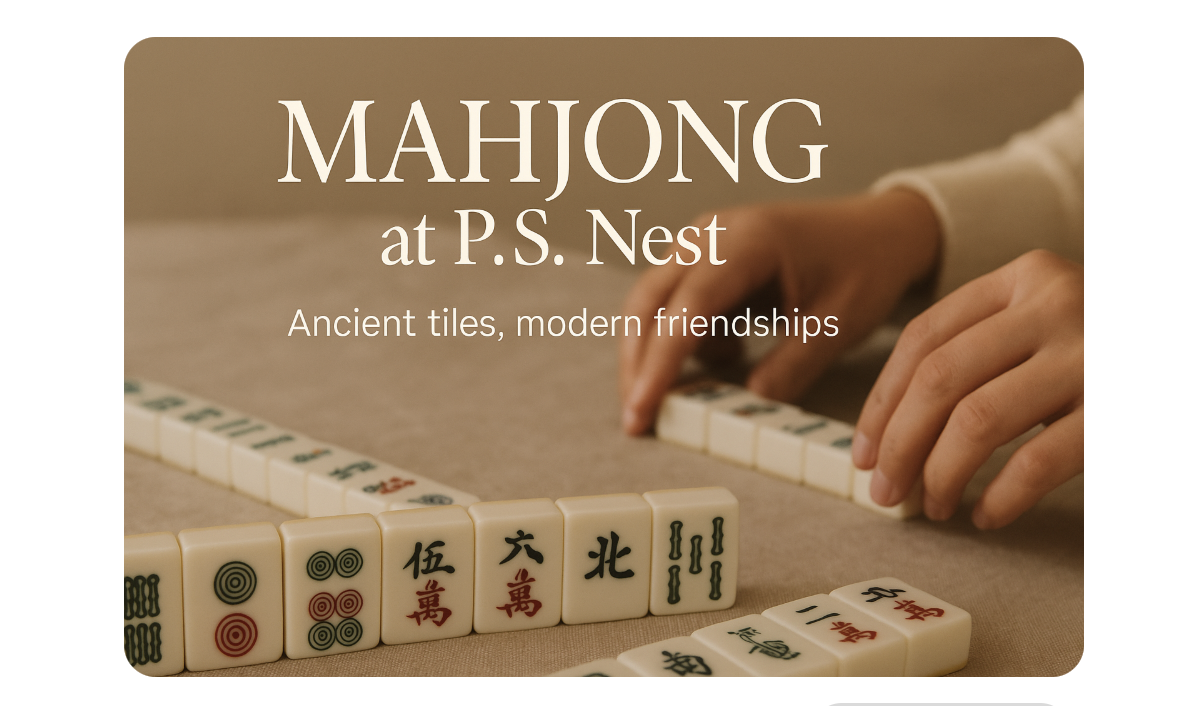
More Than a Game: The Mahjong Circle That Builds Lifelong Bonds
Discover how Mahjong at P.S. Nest brings people together through a timeless game built on strategy, laughter, and connection. Our welcoming groups and beginner-friendly lessons offer a joyful way to learn, play, and build community—whether you're brand-new to Mahjong or rediscovering a favorite pastime. Join us as we blend tradition, friendship, and modern life to nurture both home and heart.
Some things stand the test of time because they are beautiful. Others because they are joyful. And a few — like Mahjong — endure because they bring us back to one another.
For centuries, Mahjong has been played around kitchen tables, in noisy community centers, and in quiet corners of homes filled with laughter, strategy, and the soft click of tiles. Today, this ancient game is having a modern moment — not simply as a trend, but as part of a quiet cultural longing: people want connection again. Screens can keep us informed. But they can’t look us in the eye. They can’t laugh with us, tease us for a risky discard, or celebrate the thrill of going “Mahjong!” after a long build.
I’ve been playing since my children were in nursery school. Life was chaotic, wonderful, loud — and Mahjong became a steady rhythm in the swirl of parenting, working, and becoming myself. It has been a companion through carpools and graduations, joyful milestones and challenging chapters.
Game by game, hand by hand, I found something precious: a circle of women who showed up for each other — on and off the tile table.
Those friendships held laughter, vulnerability, encouragement, and grace. Mahjong wasn’t just a game — it was a lifeline, a ritual, a reminder that we are meant to gather, play, learn, stumble, and grow together.
And now, we’re delighted to share that same spirit through P.S. Nest Mahjong Circles & Tutorials.
Just as we help people create nurturing homes, we also help them build relationships and community. We believe a fulfilling life is organized not just on shelves — but in circles of belonging, curiosity, and joy. Whether you’re brand new to Mahjong or looking to refine your game, you’ll find a welcoming seat, open hands, laughter, and connection waiting for you.
Because home is not only where you live.
It’s where you gather, learn, and belong.
P.S. A nest isn’t just feathers and twigs — it’s connection, warmth, community, and shared joy.
Come play. Come learn. Come belong.
Your seat at the table is waiting.
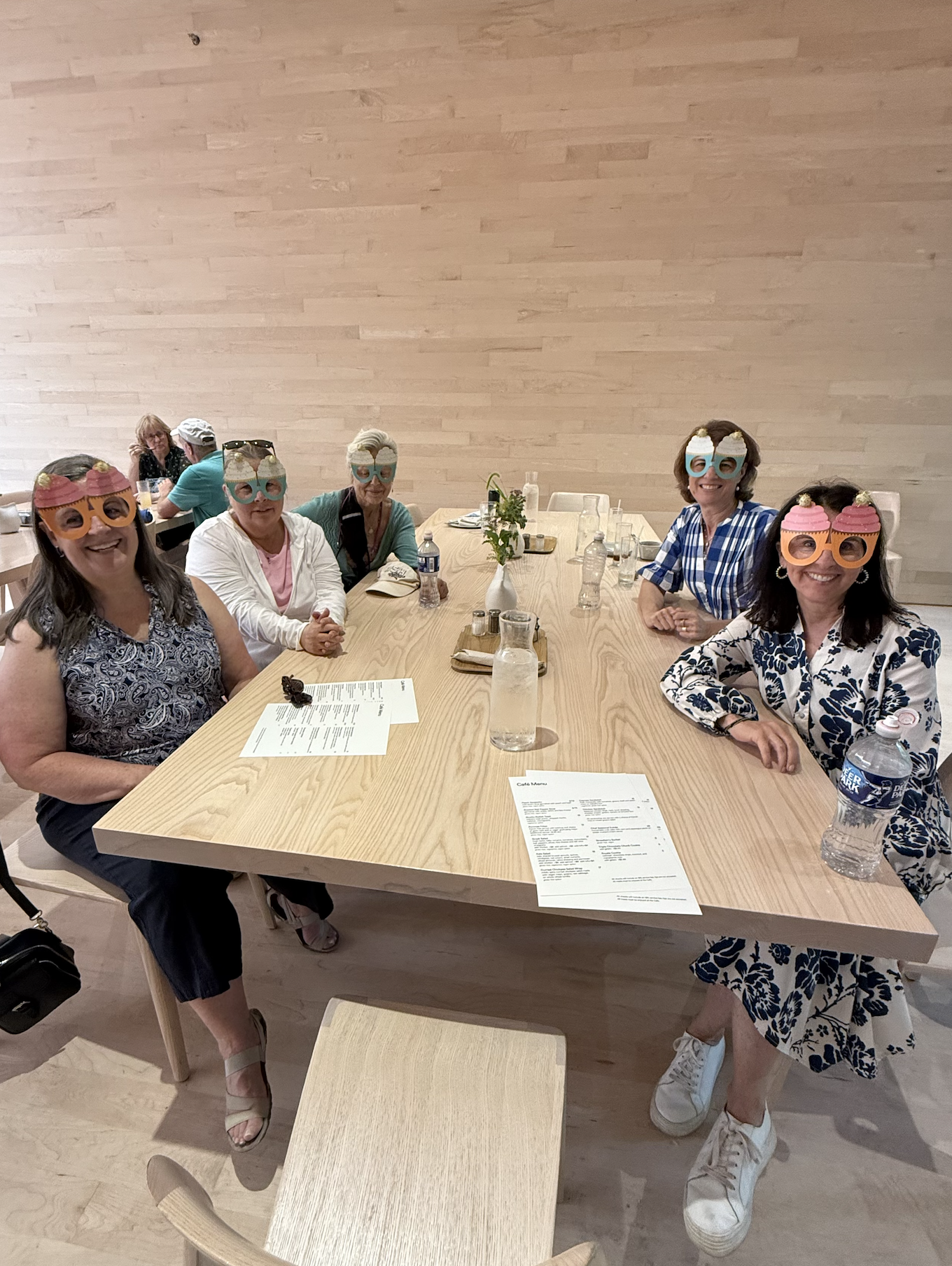
What Shared Cultural Experiences Do for Teams (That Icebreakers Never Will)
Most teams don’t need louder icebreakers—they need safer, more human ways to connect. Museums offer a powerful alternative. When colleagues encounter art, history, or design together, the focus shifts outward. Conversation becomes natural. People reveal values, curiosity, humor, and vulnerability without being put on the spot. As a Cultural Companion, I’ve watched museum experiences dissolve hierarchy and open space for genuine exchange. Connection grows not because it’s required—but because it’s shared.
Most teams don’t suffer from a lack of interaction—they suffer from a lack of meaningful connection. Icebreakers try to force camaraderie, often asking people to perform vulnerability before trust exists. Cultural experiences, by contrast, create connection without pressure.
In museums, the focus shifts outward. Instead of being asked to talk about themselves, people talk about what they’re seeing. Art, history, and design become neutral ground—safe entry points into conversation. And from there, something organic unfolds. Laughter. Curiosity. Moments of recognition. Thoughtful disagreement that feels respectful rather than risky.
On Cultural Companion tours, I’ve watched colleagues learn surprising things about one another simply by standing together in front of a single object. One person notices craftsmanship. Another connects the piece to family history. A third raises a question no one else had considered. Each contribution matters, and no one has to compete for airtime.
This kind of shared experience builds trust because it allows people to show up as they are. There’s no right answer. No expectation to be impressive. Just presence and participation. In workplaces striving for belonging and inclusion, these moments matter more than we often realize.
If you’re looking for a more human way to bring people together, consider a Cultural Companion experience for your team. Connection doesn’t have to be loud to be lasting.
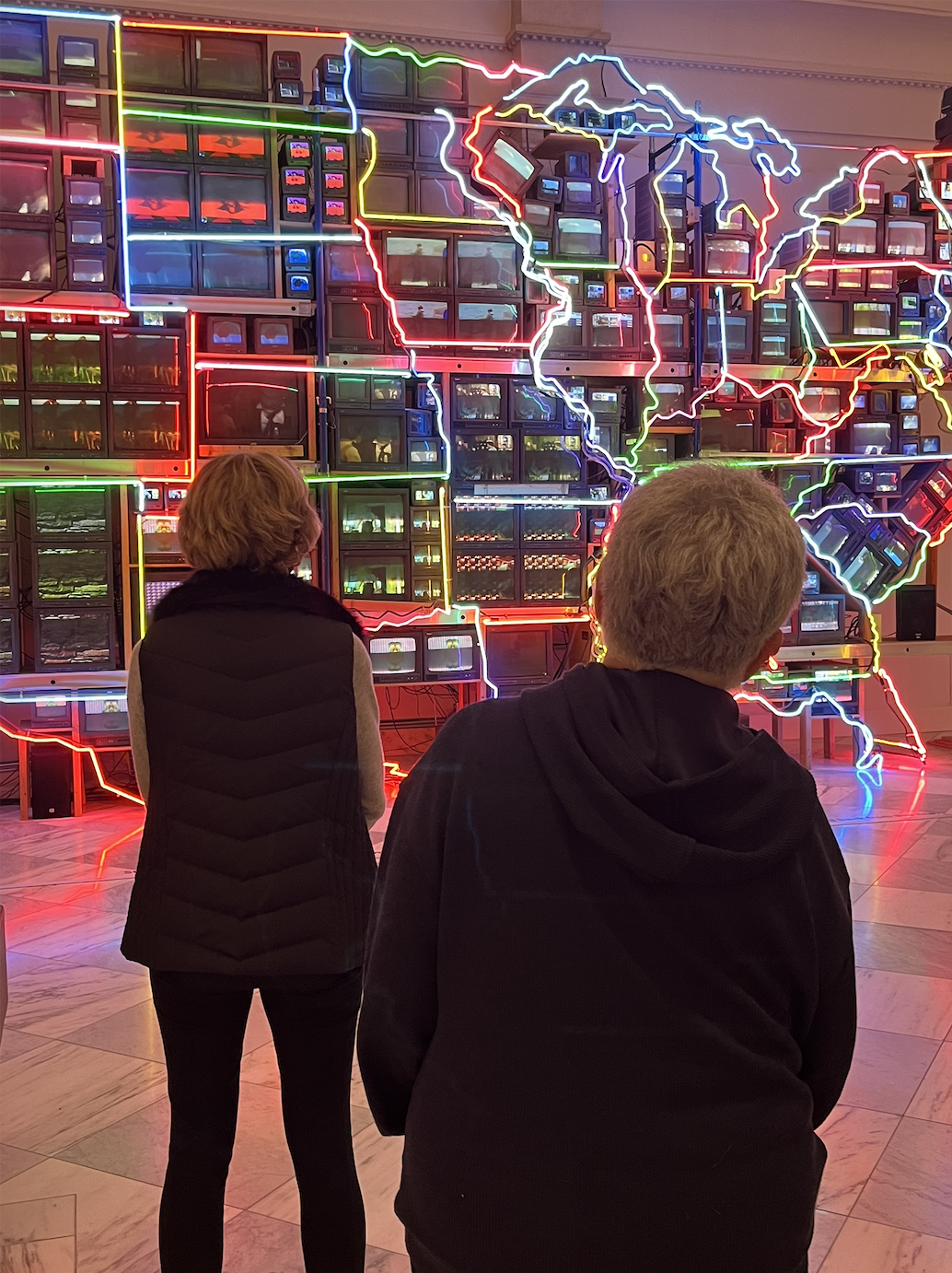
Why Slowing Down in Museums Makes You a Better Leader
In a culture that rewards speed and certainty, museums invite us to pause, observe, and reflect. These quiet skills turn out to be essential for thoughtful, human-centered leadership.
In today’s professional culture, speed is often mistaken for strength. We praise quick responses, decisive opinions, and the ability to move on without hesitation. But inside museums—quiet, deliberate, and unhurried spaces—something different happens. When we slow down, we begin to see more clearly. And that practice turns out to be deeply connected to good leadership.
During Cultural Companion tours, I often notice a subtle shift in guests who arrive rushed or mentally full. At first, they move quickly from object to object, scanning labels, gathering facts. But when we pause—really pause—with a single artwork or historical object, the energy changes. People linger. They notice details. They ask better questions. They listen more closely, not only to the art, but to one another.
Leadership, at its best, isn’t about having all the answers. It’s about discernment. It’s about knowing when to move forward and when to wait. Museums teach this skill beautifully. They reward patience. They invite reflection. They make room for uncertainty. These are the same qualities that help leaders build trust, make sound decisions, and create environments where others feel seen and valued.
Slowing down also shifts power dynamics. When no one is expected to be the expert, curiosity becomes the shared language. In a museum, leaders don’t perform—they participate. And that, I’ve found, is where connection and insight quietly grow.
If you’re craving a more thoughtful pace—whether for yourself, your team, or your clients—I invite you to experience a Cultural Companion tour. Let’s slow down together and see what emerges.
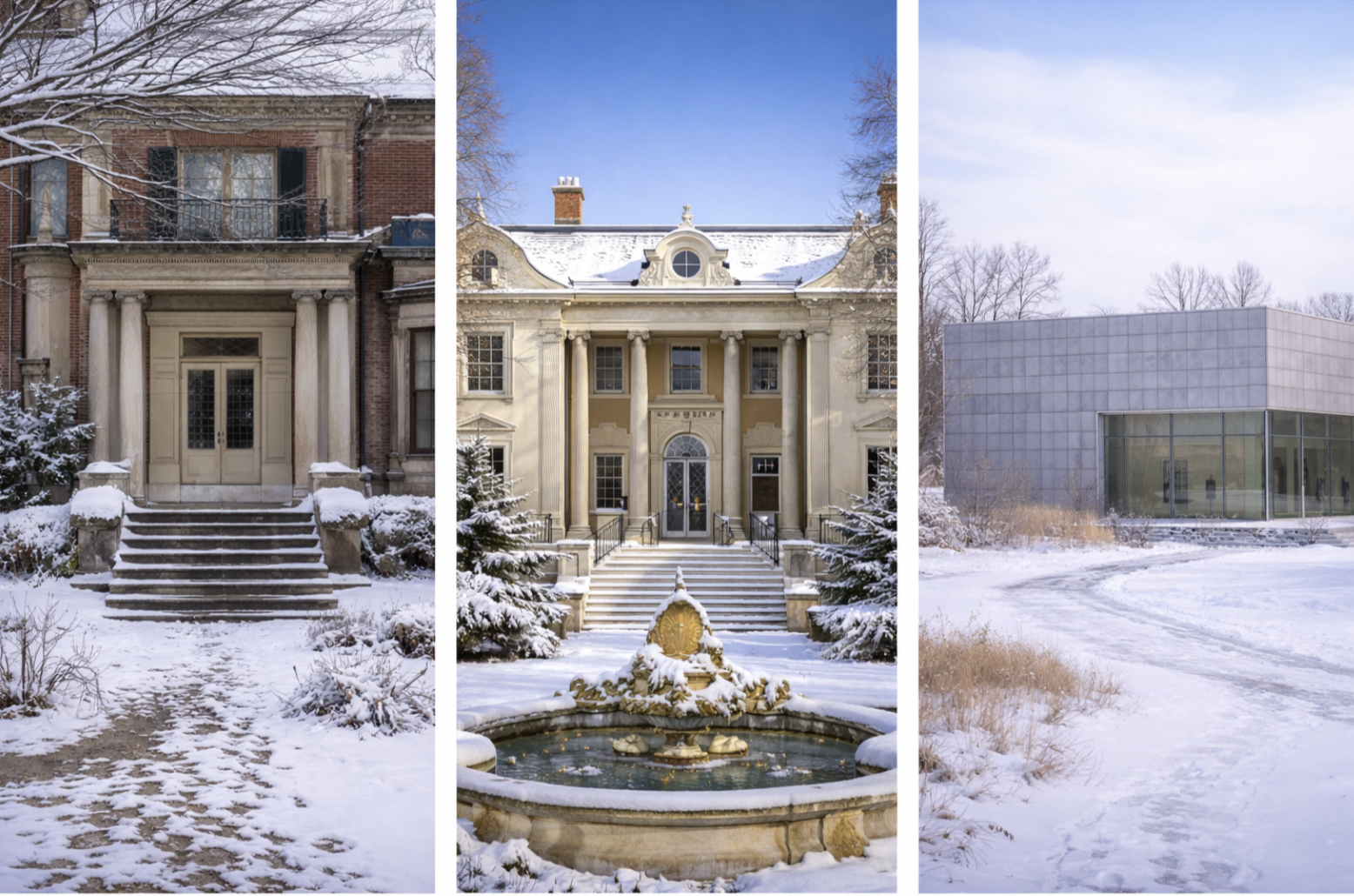
Three Visionary Collectors, Three DC Museums: A Cultural Companion Journey from Phillips to Hillwood to Glenstone
What happens when private collections become public gifts? Our snow‑kissed Cultural Companion tour through The Phillips Collection, Hillwood, and Glenstone revealed how deeply personal vision can shape shared cultural spaces—and how meaningful art experiences begin with slowing down.
There are moments when timing becomes its own kind of curatorial magic. Our recent Cultural Companion series—three days, three museums, three distinct visions—benefited from just such luck. A snowstorm swept through Washington, DC, quieting the city and leaving us with hushed galleries, pristine grounds, and the rare gift of moving slowly and thoughtfully through art that was never meant to be rushed.
The Phillips Collection, Hillwood Estate, Museum & Gardens, and Glenstone could not be more different on the surface. Yet they are deeply connected by a shared origin story: each was founded by an individual collector with strong personal taste and an equally strong belief that art gains meaning when it is shared. What unfolded over these three days was a conversation about intimacy, legacy, and how private passion becomes public gift.
Day One: The Phillips Collection — A Home That Became a Gallery
We began at The Phillips Collection, the most intimate of DC’s major museums and the first museum of modern art in America. Founded by Duncan Phillips, it still carries the feeling of a home that gently evolved into a gallery. Rooms open into rooms; sightlines matter; paintings speak to one another across doorways.
We were fortunate to spend time with Renoir’s Luncheon of the Boating Party just before it leaves Washington to travel on tour—a reminder that even beloved, seemingly permanent works are always in motion. The painting’s warmth, conviviality, and ease felt especially poignant on a cold winter morning.
One of the gifts of moving through museums as a Cultural Companion is permission for honest response. My guest was charmed and moved by Renoir, yet felt little connection to the Rothko paintings—works my husband deeply loves. That contrast sparked one of our richest conversations of the day: how modern art asks us not for consensus, but for self-awareness. At The Phillips, personal taste is not only allowed—it’s part of the legacy.
Day Two: Hillwood — A Life Fully Lived in Art
If The Phillips feels like a home adapted for art, Hillwood is unapologetically a home lived in by art. Marjorie Merriweather Post’s estate remains deeply personal, from the dressing rooms and kitchens to the formal entertaining spaces. Walking through Hillwood feels less like visiting a museum and more like being welcomed into someone’s very particular, very beautiful world.
We lingered over the extraordinary Russian and French decorative arts that define Hillwood’s collections—from luminous Sèvres porcelain to gilded furniture, textiles, and objects that speak to imperial taste and diplomatic history. Particular attention was drawn to the grand paintings displayed in the Pavilion, a space designed not only for viewing art but also for gathering: films were screened here for guests, while staff could watch from the balcony above, a reminder of how seamlessly culture and daily life intertwined on the estate.
Hillwood tells a story of collecting as caretaking. Post preserved, studied, and ultimately shared her collections with intention. Experiencing the estate in winter—quiet, elegant, and unhurried—allowed us to notice details that might be missed in busier seasons. It felt like a private visit, one built on trust between collector and guest.
Day Three: Glenstone — Art, Landscape, and Listening
Our final day brought us to Glenstone, where the museum itself feels like an artwork—an object carefully sited within landscape, light, and time. Founded by Mitchell and Emily Rales, Glenstone offers a radically different model: fewer works, more space, and an emphasis on reflection rather than consumption.
One of Glenstone’s great strengths is its people. Throughout the indoor galleries, we engaged with warm, knowledgeable, and generous gallery guides who helped us make meaning of the works without ever telling us what to think. That spirit of shared inquiry extended outdoors as well.
We were extraordinarily fortunate to experience private time with both a member of the grounds team—a horticulturist who spoke passionately about meadows, trees, and the bluebird boxes crafted from downed wood after the derecho—and a docent who guided us through the outdoor sculpture collection.
Seeing Jeff Koons’s Split-Rocker in winter was a particular treat. Without the lush blooms of summer, we could truly understand its structure, planting strategy, and maintenance. Nearby, Richard Serra’s Contour 290 asserted its quiet, monumental presence against the pale landscape.
Indoors, we spent meaningful time with works by Michael Heizer and Simone Leigh, especially Sentinel, which invited reflection on presence, power, and form. Glenstone asked us to slow down, to listen—to the art, to the land, and to one another.
Three Collectors, Three Visions, One Shared Belief
Across three days, what stayed with us most was not any single masterpiece, but the clarity of vision behind each institution. The Phillips Collection offers dialogue and intimacy. Hillwood offers immersion and lived experience. Glenstone offers space, stillness, and deep care for context.
From a home that feels like a gallery, to a home preserved as it was lived, to a museum that is itself an object for contemporary art, these spaces remind us that collecting is an act of storytelling. And when collectors choose to share their stories, they invite us to find our own place within them.
This is the heart of a Cultural Companion experience at PS Nest: moving through art with curiosity, comfort, and connection—especially when the snow falls, the crowds disappear, and the museums feel, once again, like personal gifts.
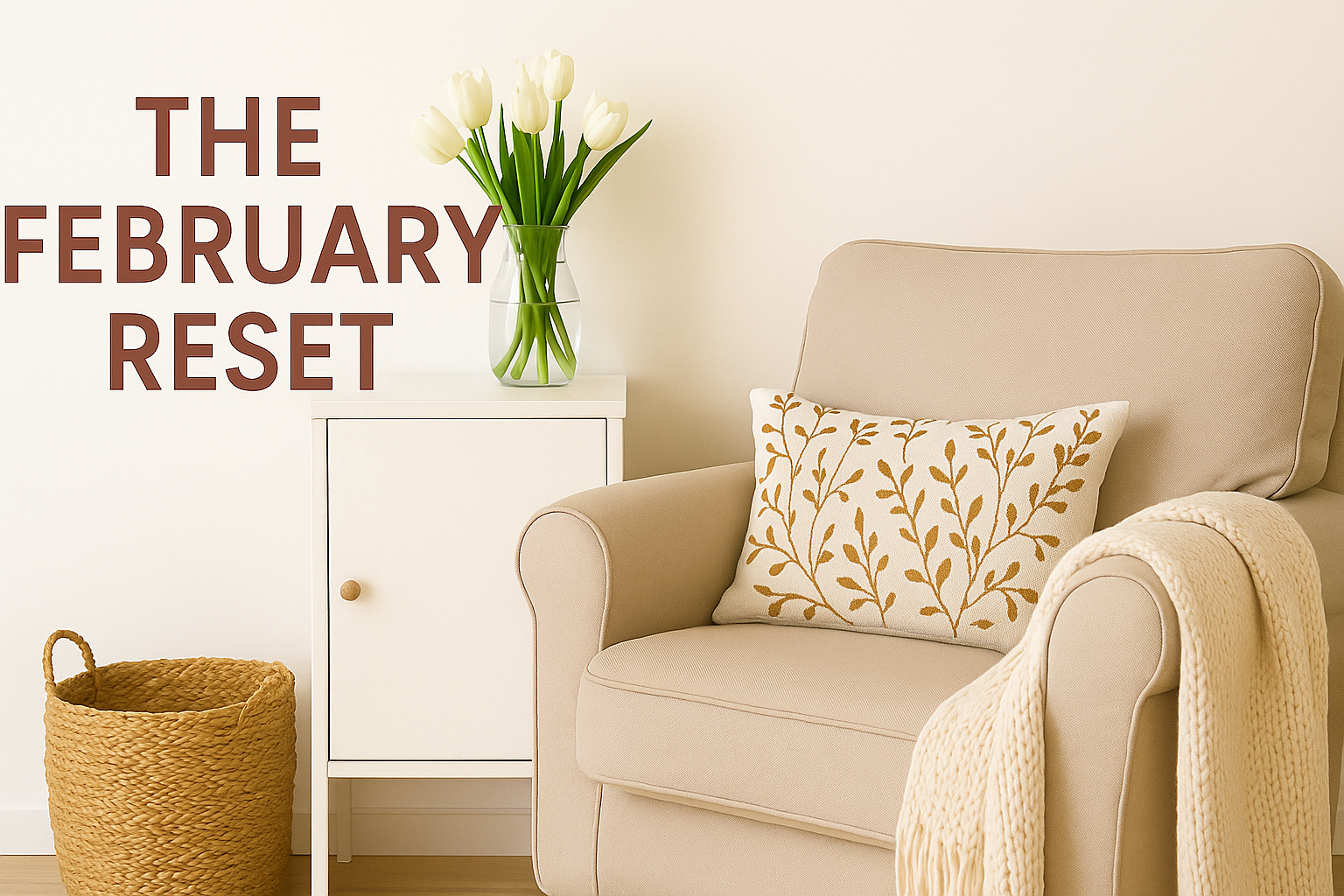
The February Reset: Organizing with Heart
This February, fall in love with your home again. P.S. Nest shares boutique-inspired home organizing ideas, decluttering tips, and easy ways to create calm, beautiful spaces filled with meaning and ease.
February is often called the month of love—but what if we turned a little of that affection inward, toward the place that shelters, supports, and reflects us most: our home?
While January is all about resolutions, February invites reflection—a softer, slower season to nurture your surroundings and rediscover the joy in your everyday spaces.
At P.S. Nest, we believe that home organizing isn’t about having less—it’s about living more intentionally with what you love. So let’s warm up the coldest month with a few heartfelt, practical ways to bring calm, clarity, and connection back into your nest.
1. Love Notes to Your Space
Start small. Choose one corner or surface that always seems to collect “life clutter”—a dresser top, an entryway table, or that corner of the kitchen counter.
Give it five minutes of attention: clear, clean, and restyle it with intention. Add a small vase, a candle, or something meaningful.
Pro Tip: When every surface has a purpose, clutter doesn’t stand a chance. Think of it as leaving a love note to your future self.
2. The Gentle Closet Edit
Forget the ruthless “keep or toss” routine. Instead, channel February’s tender energy. Ask: Do I feel good when I reach for this?
Curate your closet for how you live now. Donate what no longer fits your season or spirit—it might be someone else’s perfect piece.
Organizer Insight: Use slim, matching hangers and group clothes by color. The visual calm they create is instant, and surprisingly addictive.
3. Create a Comfort Zone
February is all about cozy corners—nooks that invite pause. Choose one area to make your “comfort zone”: a reading chair, window seat, or even a tidy kitchen counter for morning tea.
Declutter it, soften the lighting, and add textures that make you exhale—a blanket, a favorite mug, a photo you love.
Pro Tip: A truly organized home isn’t about minimalism—it’s about ease. The right items in the right places, ready to support your rituals.
4. Tame the Paper Trail
With tax season looming and mail piling up, this is the perfect month to reset your paper systems.
Sort into three labeled trays: To Do, To File, and To Recycle. Then—this is key—give each one a destination. File papers weekly, recycle daily, and digitize where possible.
Pro Tip: Keep a recycling bin where you open the mail. You’ll cut paper clutter in half before it ever touches a surface.
5. Revisit Your Resolutions
If your January resolutions have lost steam, don’t worry—February is your fresh start.
Instead of chasing big changes, focus on small daily resets: a 10-minute tidy-up, a nightly surface clear, or an organized morning routine that feels like self-care.
Organizer’s Secret: Sustainable systems > spontaneous cleanouts. You’re building calm, not chaos disguised as productivity.
P.S.
Love your home a little extra this month. Organizing isn’t punishment—it’s a way to say thank you to the space that holds your stories.
Whether you’re curating your closet, refreshing your routines, or rediscovering your favorite corner, remember: every edit is an act of care.
And if you’re ready to bring in a calm, creative guide, P.S. Nest is here to help you reset your nest—with artistry, intention, and heart.
Discover how P.S. Nest can help you declutter, organize, and transform your home with expert home organizing services designed for lasting calm and beauty.
Many Voices, One Nation: A Cultural Companion Reflection at the Smithsonian
We expected to be awed by the Star-Spangled Banner, nostalgic over Dorothy’s ruby slippers, inspired by Clara Barton’s humble ambulance, delighted by the Gypsy Rose lowrider, and dazzled by the First Ladies’ dresses. We were. But it was a small seal in the exhibition Many Voices, One Nation—and the phrase E Pluribus Unum—that stayed with me long after we left the museum.
When you walk into the Smithsonian’s National Museum of American History, you expect to be awed.
And we were.
We stood before the Star-Spangled Banner, enormous and fragile, carrying the weight of centuries. We were swept back to childhood by Dorothy’s ruby slippers, impossibly small and still shimmering with magic. We paused at Clara Barton’s early ambulance—not a vehicle as we imagine one now, but a simple covered wagon with a red cross painted on its side—reminded that courage and care often begin humbly. We were surprised and delighted by the artistry and engineering of the lowrider Gypsy Rose, and, of course, completely gobsmacked by the elegance, symbolism, and sheer presence of the First Ladies’ dresses.
These are the moments people come for. These are the objects we remember from school trips and postcards and collective memory.
And yet.
It was none of these that stayed with me in the hours after we left.
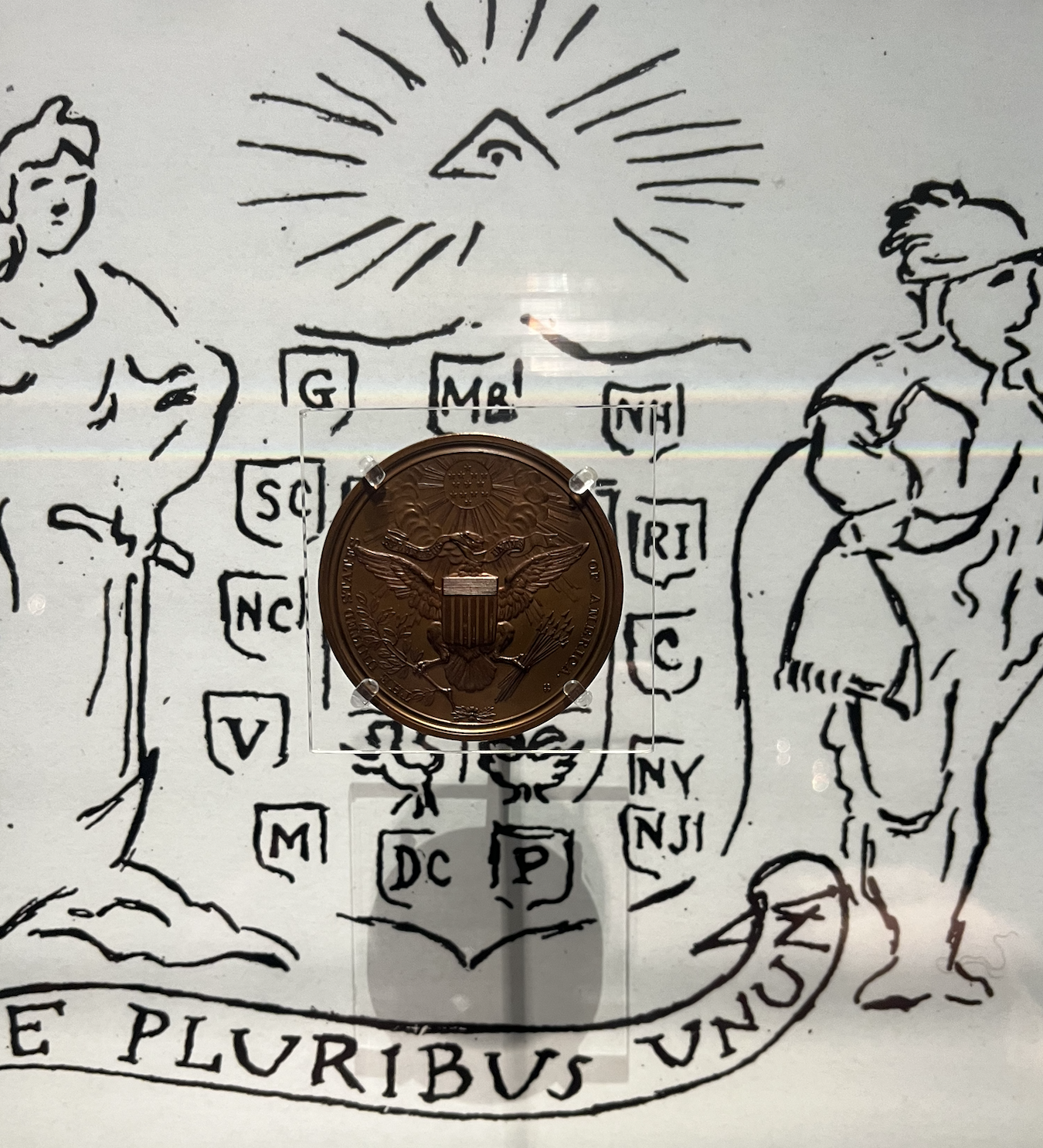
Instead, it was a small seal, tucked into an exhibition titled Many Voices, One Nation, that lingered quietly but insistently.
The seal tells a lesser-known story about the origins of the Great Seal of the United States. In 1776, artist Pierre Eugène Du Simitière proposed a design that reflected the people already shaping this new country: an English rose, an Irish harp, a Scottish thistle, a French fleur-de-lis, a Dutch lion, and a German eagle. A visual acknowledgment that America was never meant to be a single-origin story.
The Continental Congress ultimately chose the American bald eagle instead—but they kept Du Simitière’s motto:
E Pluribus Unum.
Out of many, one.
It’s a phrase we see on coins and buildings, often without a second thought. But standing there, reading it in context, it felt less like a slogan and more like a promise—one we are still struggling to keep.
This is why museums like this matter so deeply. Not just for spectacle or nostalgia, but for grounding. I found myself thinking that all our national leaders should walk these halls regularly—not to celebrate power, but to remember purpose. To remember that immigration, diversity, and pluralism were not accidental outcomes of our history, but foundational ideas.
And all schoolchildren should be learning this phrase in civics class—not as vocabulary to memorize, but as a concept to wrestle with. What does it actually take to build one nation out of many voices? What responsibilities does that place on us?
Would our forefathers be proud of every choice we’ve made along the way? Almost certainly not. Our history is marked by contradictions, exclusions, and painful failures alongside progress and hope. But the American experiment was never meant to be finished. It was meant to evolve—to be questioned, corrected, expanded.
The future remains open. Possibility still exists. And sometimes, it’s not the largest flag or the most famous artifact that reminds us of that—but a small seal, quietly asking us to do better.
As a Cultural Companion, these are the moments I cherish most: when history doesn’t shout, but whispers—and stays with you long after you’ve gone.
Snow, Stillness, and Seeing More: A Cultural Companion Experience in Quiet DC Museums
A rare DC snowstorm turned two iconic museums into peaceful sanctuaries. A Cultural Companion visit with a client from Montana became a reminder that art, conversation, and a warm meal can make even the coldest days feel like home.
Washington, DC is rarely quiet—especially inside its most visited museums. So when a recent snowstorm settled over the city and softened its usual pace, it created a rare and unexpected gift: space to linger, reflect, and truly see.
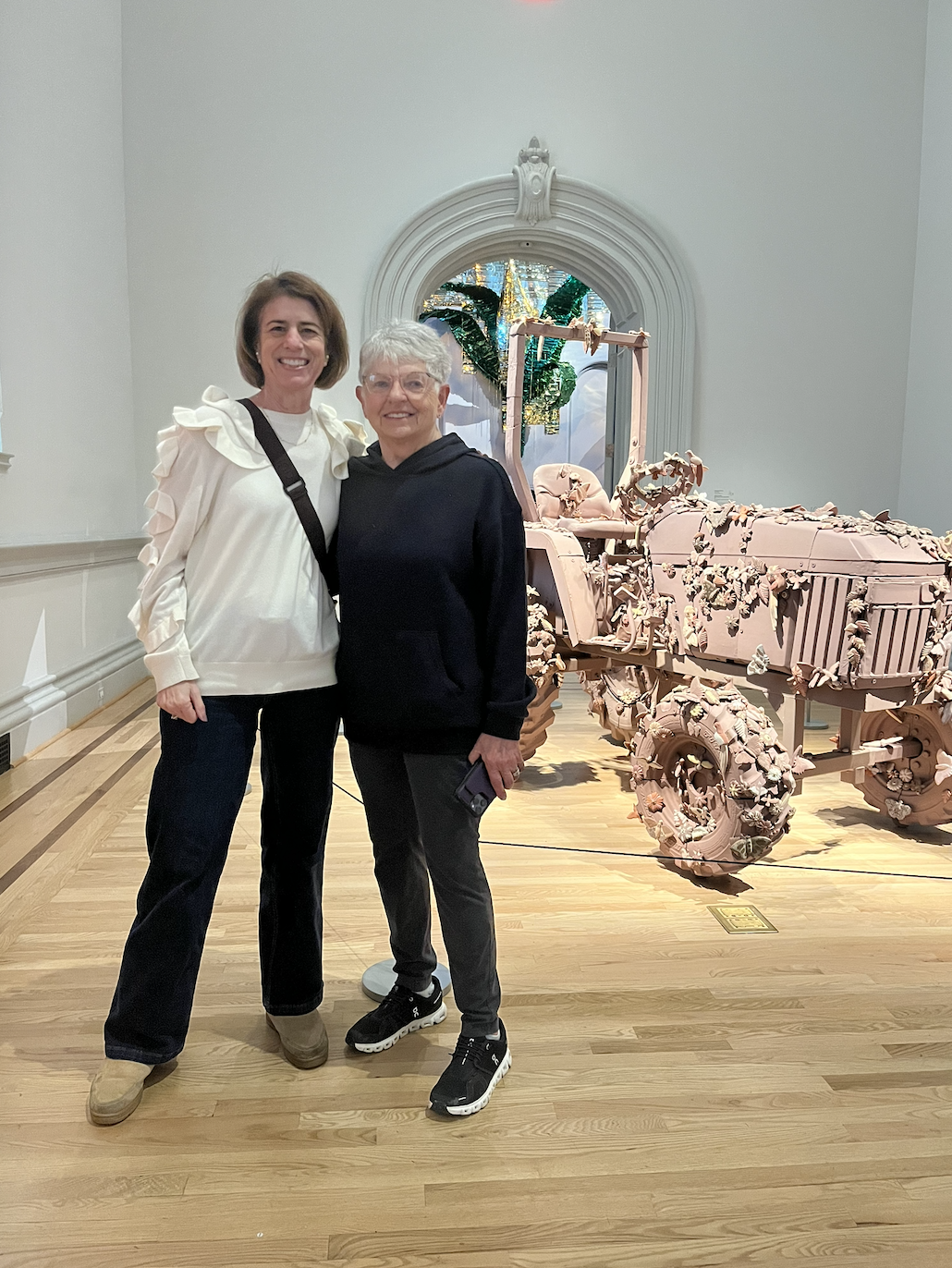
I spent the past two winter mornings with Beverly, a thoughtful visitor from Montana, exploring two museums that could not be more different in tone, yet felt perfectly paired. Both the National Museum of African American History and Culture and the Renwick Gallery were nearly empty—an unheard-of luxury in this city, and a powerful setting for a Cultural Companion experience.
Our first day took us into the National Museum of African American History and Culture, a place steeped in the weight of this country’s history—from slavery through Reconstruction, the Civil Rights Movement, and into the present day. The quiet amplified everything. Without crowds, the stories felt closer, more personal. We moved slowly, allowing ourselves to pause when we needed to.
One moment in particular stays with me. Beverly and I sat together—alone, but not alone—on a pew-like bench facing Emmett Till’s casket. No words were necessary. It was a moment of shared reflection on how far this country has come, and how far we still have to go. The stillness allowed the history to settle in our bodies, not just our minds.
Afterward, we warmed ourselves at the Sweet Home Café, enjoying comforting plates of chicken and beautifully cooked broccoli—simple food, deeply satisfying, and grounding after such an emotional morning.
The following day offered a striking contrast. At the Renwick Gallery, we stepped into a world of American craft, humor, labor, and imagination. Where the previous day had been weighty and solemn, this visit was full of surprise and quiet delight.
We lingered over objects gathered from state fairs: a life-size butter cow resting in a refrigerated glass chamber; a John Deere tractor crafted entirely from clay and adorned with birds and butterflies, like a modern tree of life. One of the most astonishing works was a quilt made of 87,000 tiny pieces by Grace Snyder of North Platte, Nebraska—stitched in the 1940s while she raised cattle, cared for four children, and managed the endless work of daily life. The piece felt both monumental and intimate, a testament to patience, devotion, and unseen artistry.
The snow had changed the city outside as well. Streets near the White House were closed, Lafayette Square inaccessible, and our usual route to lunch rerouted into a much longer walk than planned. We made our way around H Street, fingers numb but spirits high, eventually arriving at The Old Ebbitt Grill—a DC institution—very ready for hot drinks and sandwiches. Once thawed and fed, we laughed about earning every bite.
Those four hours together felt like exactly what Cultural Companions is meant to be: time to move slowly, to notice contrasts, to sit with art rather than rush past it, and to share conversation shaped by curiosity rather than instruction.
I’m very much looking forward to spending more time with Beverly next week as we explore five more of DC’s museums and hidden gems together. Snowstorms don’t come often here—but when they do, they remind us that sometimes the most memorable cultural experiences happen when the city quiets down and makes room for reflection.

From Curator of Culture to Curator of connection: My Journey
With over two decades of experience as a museum curator of education, I’ve designed everything from interactive gallery tours and art camps to symposia, teacher trainings, and museum travel experiences. Today, through P.S. Nest’s Cultural Companion offerings, I bring that same expertise to intimate, thoughtfully guided museum visits in Washington, DC—creating meaningful, conversational experiences that prioritize connection over crowds and curiosity over consumption.
For more than twenty years, I worked as a museum curator of education in historic houses and museums across the DC and Baltimore region. My role was never just about objects—it was about people. I designed experiences that helped visitors of all ages connect meaningfully with art, history, and each other.
Over the years, that work took many forms: interactive gallery tours, art camps for children, teacher trainings, public programs, gallery talks, scholarly symposia, and even weekend bus tours to museums in other cities. Whether I was leading a small group through a historic home or planning a large-scale program for educators, my focus was always the same—how to create access, spark curiosity, and invite conversation.
With a master’s degree in material culture from the Winterthur Museum, I was trained to read objects closely. Furniture, clothing, photographs, and everyday things all held stories waiting to be uncovered. I often joked (lovingly) about curating “cultural clutter,” but the truth is that those objects were never clutter at all. They were entry points—ways to help people see themselves reflected in history.
And then life reframed the work.
When my parents began downsizing—more than once, before they both passed away—I found myself using those same curatorial skills in a deeply personal context. I wasn’t developing exhibitions anymore; I was sorting through a lifetime of memories. Travel souvenirs, family photographs, beloved objects, and yes, my mother’s legendary collection of shoes. Each item carried a story, a laugh, a moment in time. Those shoes, I like to imagine, are still dancing—heading to the beauty parlor or strolling along the Seine on a moonlit evening.
That experience reshaped my understanding of curation. It was no longer about interpretation for the public—it was about care, discernment, and honoring what matters most. Letting go wasn’t about loss; it was about making room for what comes next.
That philosophy first took shape in my work co-founding Room 2 Bloom DC, where I helped clients navigate downsizing, transitions, and the emotional weight of belongings. Today, it lives on through P.S. Nest, and through one of its most personal offerings: Cultural Companion.
Cultural Companion draws directly from my museum career—those years of designing thoughtful, inclusive, human-centered experiences. I now use those finely honed skills to create intimate, gently paced museum visits for individuals and small groups in Washington, DC. These are not traditional tours. They are conversational, relational experiences designed to help people feel comfortable, curious, and connected—to the art, to the city, and to each other.
In many ways, I’ve moved from being a curator of culture to a curator of connection.
The museum world taught me how to design experiences that linger. Life taught me that meaning deepens when we slow down and share it with others. Through P.S. Nest and Cultural Companion, I continue to curate—but now the focus is not on exhibitions or collections. It’s on people, presence, and the joy of engaging with culture in ways that feel personal, accessible, and alive.
Curious about experiencing museums in a more personal, unhurried way?
Explore Cultural Companion experiences with P.S. Nest and discover how art, history, and conversation can unfold beautifully—one thoughtful moment at a time.

Snow Is Coming. Let’s Talk About Connection.
There’s a certain pause that happens in the days before a snowstorm.
Plans soften. Calendars loosen. We check the forecast one more time and—almost without realizing it—slow down. Those moments of quiet anticipation have a way of reminding us how much we value connection and time well spent.
Winter in Washington, DC offers a perfect invitation to reconnect. Our museums become warm, contemplative spaces—places to linger, reflect, and engage with ideas without rushing. Yet too often, we experience them quickly, checking boxes rather than building meaning.
At P.S. Nest, this is where Cultural Companion begins. These are thoughtfully guided, conversational museum outings designed for individuals or small groups who want to experience art and history at a gentler pace. No lectures. No crowds. Just time to look closely, ask questions, and share observations—along with a café break or two.
As the season unfolds and the city moves from winter into spring, I’m thinking a lot about how we choose to spend our attention. Snowstorms remind us that connection doesn’t need to be grand to be powerful. Sometimes it’s quiet, intentional, and deeply restorative.
If you’re craving more meaningful ways to engage with culture—and with one another—this might be the season to slow down and step inside.
There is a very particular feeling in the days before a snowstorm.
The grocery store shelves grow mysteriously bare of bread and milk. Weather apps are checked with an optimism that borders on denial. Plans are tentatively canceled, then uncanceled, then canceled again. And somehow—almost without trying—we begin to slow down.
Snowstorms have a way of doing that. They press pause. They remind us to look out the window, to reach out to someone we haven’t checked in on, to consider how we want to spend our time when the world feels quieter and a little more contained.
At P.S. Nest, we think a lot about moments like this—the in-between times when life gently nudges us toward reflection. The days before a storm are not really about snow. They’re about connection. About noticing. About asking ourselves what we want more of once the sidewalks are shoveled and the city begins to hum again.
Often, the answer is simple: time well spent with other people.
Winter in Washington, DC, has a unique rhythm. When the air turns crisp and the days grow shorter, our museums become even more inviting. They are warm, luminous spaces filled with stories, ideas, and places to linger. And yet, so many of us rush through them—checking boxes, following arrows, scanning labels, moving on.
What if we didn’t?
What if, in the coming months, you explored museums the way we approach a snow day—with intention, curiosity, and room to pause?
That’s where Cultural Companion comes in.
Cultural Companion experiences are designed for people who want to engage with art and history in a more human way. Not a lecture. Not a crowded tour. And definitely not a marathon march through every gallery. Instead, these are gently paced, conversational outings for one or two people—built around looking closely, asking questions, sharing observations, and allowing meaning to unfold naturally.
Think of it as the museum equivalent of a good winter walk: unhurried, bracing in the best way, and unexpectedly nourishing.
Maybe you’ve lived in DC for years and never quite found your way into certain museums. Maybe you love culture but feel overwhelmed by where to start. Maybe you have a parent, partner, or friend who would enjoy museums more with a steady companion and someone to guide the experience thoughtfully. Or maybe you’re simply craving connection—real conversation, shared moments, something that feels restorative rather than demanding.
Snowstorms remind us that we don’t have to do everything at once. That it’s okay to settle in. That beauty often reveals itself when we stop rushing past it.
A Cultural Companion outing creates that same feeling—space to notice, time to reflect, and the quiet pleasure of experiencing something meaningful alongside someone else. There’s room for café breaks, for sitting when needed, for stories that wander (in the best possible way). It’s culture with warmth. Art with breathing room. History with heart.
As winter unfolds and spring begins to peek around the corner, consider how you want to reconnect—with the city, with ideas, with other people, or even with yourself. The museums will be waiting, just as they always are. The difference is how you choose to enter them.
So yes, stock up on bread. Check the forecast one more time. And when the snow melts and the sidewalks clear, think about making plans that linger a little longer than the storm itself.
At P.S. Nest, we believe connection doesn’t need to be loud to be lasting. Sometimes, it begins quietly—on the eve of a snowstorm, or in a museum gallery, with good company and time enough to look closely.
Start Fresh: How to Get Organized for the New Year with P.S. Nest
Start your new year with a curated home. P.S. Nest shares smart, stylish organizing tips and pro solutions to declutter your life beautifully.
The confetti has settled, the resolutions are in motion, and your home might be quietly whispering: help.
If “get organized” made your New Year’s list again (for the third year running), it’s time to do something different. At P.S. Nest, we believe home organization isn’t about perfection—it’s about permission. Permission to breathe easier, to live more intentionally, and to curate a home that reflects your best self.
Before you buy more bins or vow to overhaul your entire house in one weekend, take a breath. Here’s your practical, witty, and totally doable guide to resetting your nest—with pro organizing tips and real-life solutions from the experts at P.S. Nest.
Challenge #1: The “Everything Drawer” That Holds… Everything
The Problem: You know the one—batteries, receipts, rubber bands, and 47 pens that may or may not work.
The P.S. Nest Solution:
Treat your junk drawer as a mini home organization project. Empty it completely, group items by category, and only keep what you truly use.
Pro Organizer Tip: Use small containers, bowls, or recycled candle jars to create zones. And for mystery items? Place them in a “quarantine box.” If you don’t need them after 30 days, they’re out.
SEO Takeaway: Start small. Even a single organized drawer can spark the motivation to declutter your home one space at a time.
Challenge #2: The Closet Time Capsule
The Problem: You have clothes from five eras of your life—and they’re all mingling.
The P.S. Nest Solution:
Instead of the overwhelming “keep or toss,” try curating by season and self. Ask: Would Future Me wear this?
Pro Organizer Tip: Set a timer for 20 minutes and tackle just one section—jeans, shoes, or jackets. Then donate right away. Your “someday outfit” could be someone else’s today confidence.
SEO Takeaway: This is one of the simplest closet organizing ideas that actually sticks—short sessions, clear categories, and guilt-free editing.
Challenge #3: The Countertop Clutter Cycle
The Problem: You clear your counters and somehow, they refill overnight.
The P.S. Nest Solution:
Clutter loves flat surfaces. Create designated “landing zones” for everyday items—keys, mail, earbuds, sunglasses.
Pro Organizer Tip: Give each category a defined home. Use trays, baskets, or bowls that match your décor so your storage solutions blend seamlessly with your style.
SEO Takeaway: The secret to kitchen and home office organization is visual flow—what you see affects how you feel.
Challenge #4: The Paper Avalanche
The Problem: Mail, bills, and notes pile up faster than you can say “unsubscribe.”
The P.S. Nest Solution:
Sort papers into three categories: To Do, To File, and To Toss.
Pro Organizer Tip: Keep a recycling bin right where you open the mail—half of what arrives doesn’t need to enter your home at all.
SEO Takeaway: Going digital and simplifying paper systems are easy ways to declutter your home and reclaim peace of mind.
Challenge #5: The Sentimental Stuff
The Problem: You can’t let go of items that remind you of people, places, or moments—even if they’re taking over your space.
The P.S. Nest Solution:
You’re not discarding memories—you’re curating them. Choose a few treasures to display or archive beautifully, then photograph the rest.
Pro Organizer Tip: Create a labeled “Legacy Box” for keepsakes. Your space should tell the story of who you are now, not who you were 10 years ago.
P.S. Nest’s Expert Tips to Stay Organized All Year
Start Small, Think Big: One organized drawer can shift your entire mindset.
Label Everything: Labels are love notes from your organized self to your future self.
Store Items Where You Use Them: Logical placement keeps systems sustainable.
Schedule Maintenance Days: Organization is a lifestyle, not a one-time event.
The P.S. Nest Difference
Think of P.S. Nest as your personal curator of home and life—a boutique team that helps you create harmony between your space and your story.
We offer:
Complete Home Organizing Services – Custom systems for every room, from kitchen to garage.
Closet & Wardrobe Curation – Edit, style, and simplify your closet with confidence.
Office & Paper Organization – Transform your workspace into a calm, functional zone.
College Prep & Tutoring Support – Organizing both spaces and minds for success.
Whether you’re craving calm or simply want your home to function better, P.S. Nest brings beauty, order, and ease to your everyday life.
Your New Year Nest Reset
This year, skip the guilt-driven “organizing marathon” and embrace something more sustainable: small steps, steady progress, and systems that support how you actually live.
When you’re ready to begin—whether it’s one drawer or your entire home—P.S. Nest is here to guide, cheer, and curate your way to calm.
Because every nest deserves a fresh start. Especially yours.
Schedule your P.S. Nest consultation and discover a fresh approach to organized living.
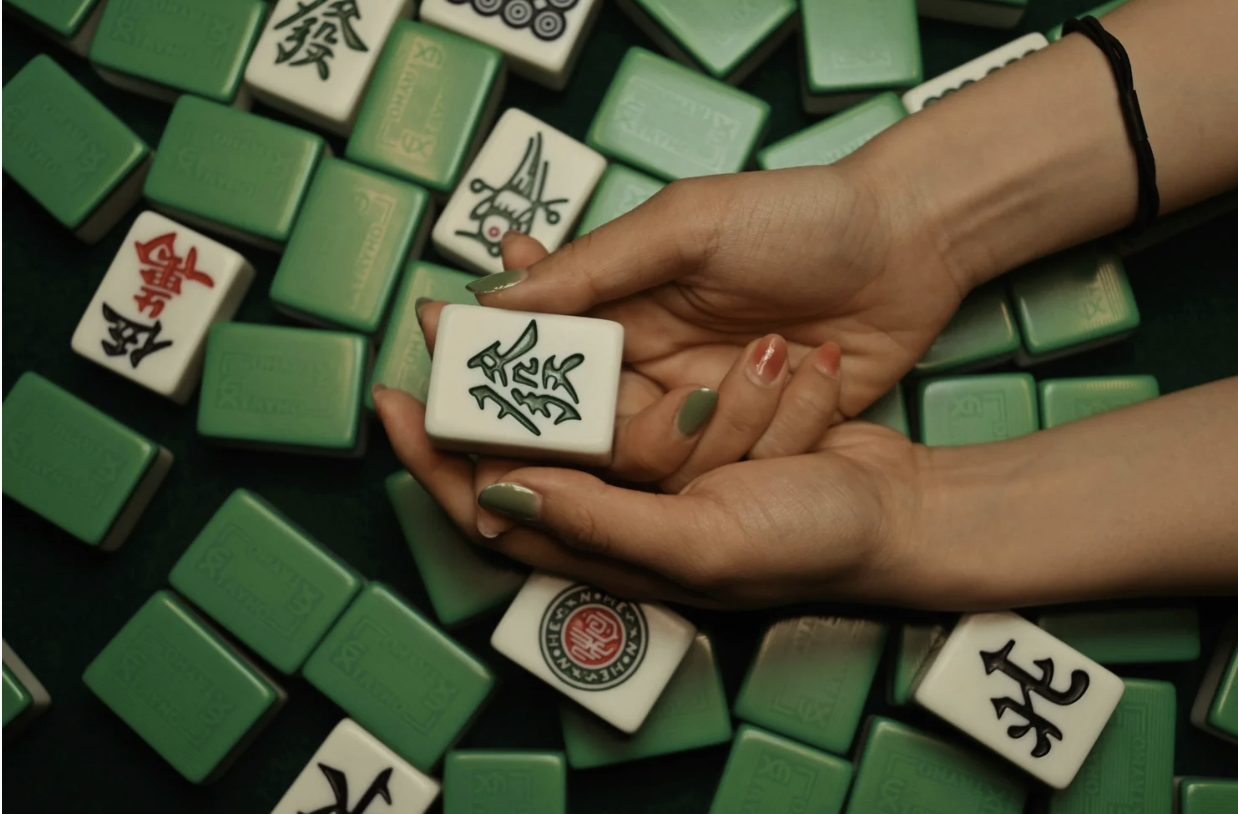
Rebuilding the Table: Why We’re Creating New Ways to Gather After the Pandemic
After the pandemic reshaped how we gather, PS Nest is reimagining in-person connection through Mahjong games, art workshops, and poetry reading clubs. These small-group experiences are designed to rebuild social networks, foster creativity, and support personal growth through intentional, face-to-face community. Discover how shared learning, play, and expression are helping adults reconnect in meaningful ways.
For a long time, we learned how to live without the accidental magic of each other.
The pandemic changed everything about how we gather—how we connect, how we rest, how we learn, how we belong. It sharpened our independence, stretched our resilience, and quietly starved many of us of the simple human nourishment that comes from sitting across a table, sharing air, sharing stories, sharing time.
And now, years later, something subtle but powerful is happening.
People are ready to come back to themselves—and to each other.
That is why we are opening new in-person spaces through P.S. Nest: not as events to attend, but as networks to grow into. These are not about productivity, performance, or perfection. They are about relearning how to be human together again—slowly, creatively, and with intention.
The Power of Gathering With a Purpose
Social networks used to grow organically through offices, schools, chance encounters, and shared routines. The pandemic fractured those natural systems. Many of us rebuilt our lives in isolation, online, or in survival mode. Even now, when things are “back,” something still feels missing.
So the question became:
What does meaningful connection look like now?
For me, the answer lives in shared experiences that invite both presence and participation—spaces where learning and relationship unfold at the same time. That’s how Mahjong games, art workshops, and poetry reading clubs found their way into this work.
Each one is a doorway.
Each one is a table.
Mahjong: Strategy, Story, and Side-by-Side Connection
Mahjong is more than a game—it’s an education in patience, observation, and adaptability. When people sit down to learn Mahjong together, they aren’t just memorizing tiles. They’re practicing how to be beginners again. They’re asking questions. They’re laughing at mistakes. They’re sitting with not knowing and discovering together.
And something beautiful happens when your hands are busy and your phone is away:
conversation softens, walls lower, and community forms without effort.
Strangers leave the table as acquaintances. Acquaintances return as friends.
Art Workshops: Making Space for Expression and Play
So many adults lost access to creative play somewhere along the path of responsibility, work, and survival. Art workshops reopen that door.
These are not about being “good” at art. They are about giving your nervous system permission to explore without pressure. When people create side by side—painting, collaging, sketching, experimenting—they often share parts of themselves they didn’t even realize were closed off.
Art bypasses small talk. It creates shared vulnerability without requiring personal disclosure. It builds connection through the hands before the heart even knows what’s happening.
And slowly, quietly, people begin to feel safe again—in their bodies, in their ideas, in their presence.
Poetry Reading Clubs: Language for What We’ve Lived
The pandemic gave us experiences that language still struggles to hold. Loss. Disorientation. Reinvention. Loneliness. Resilience. Longing. Hope.
Poetry offers us words when our own run out.
In poetry reading clubs, we gather not to analyze, but to listen. To be moved. To recognize ourselves in each other’s reflections. These nights remind us that we are not alone in our interior worlds—and that shared silence can be just as connective as shared conversation.
Why This Matters Now
These gatherings are not about nostalgia for “how things used to be.” They are about building something more intentional than what ever existed before.
We now understand how fragile connection is. We understand how easily community can disappear. And because of that, we are far more capable of creating it with care.
I believe deeply that:
Learning together builds trust.
Playing together builds safety.
Creating together builds belonging.
And showing up consistently builds community.
These are not events.
They are practice grounds for being human again.
After everything we’ve lived through, we don’t just need more social plans.
We need places to land.
That is what PS Nest is becoming: a home for rebuilding connection, one table, one poem, one brushstroke, one tile at a time.
And if you find yourself craving something more grounded than scrolling, more nourishing than networking, and more real than “getting back to normal”—you already understand why we’re doing this.
The Meaning Behind P.S. Nest: A Signature and a Sanctuary
Every name tells a story.
Get organized for the new year with P.S. Nest. Expert home organizing tips, decluttering ideas, and practical storage solutions to simplify your life beautifully.
Every name tells a story.
When we set out to launch P.S. Nest, we wanted a name that reflected not just what we do, but why we do it. We wanted it to feel personal, meaningful, and a little bit poetic—like a handwritten note at the end of a letter or a cozy chair by a sunny window.
Here’s what it means to us.
Nest: Home in All Its Forms
A nest isn’t just a structure. It’s a place of comfort, safety, and care. It’s where life happens: where babies come home, where grown kids leave for their next adventure, where transitions unfold, where we return at the end of the day.
We love the way the word “nest” captures the heart of home—both as a shelter and as a springboard for growth.
A nest is:
A place to land and feel at ease.
A place to grow and adapt as life changes.
A place to launch from when new opportunities call.
A place to tend, because a well-tended space supports a well-lived life.
We see our role as helping you tend your nest so that it supports your journey—wherever you’re headed next.
The Heart of Our Work
At P.S. Nest, we believe a well-organized home is less about perfection and more about possibility. When your environment works with you, not against you, it frees you to focus on what really matters—your relationships, your goals, and the moments that make up your life. We work with all kinds of clients and families:
Seniors preparing for a simpler, more manageable next chapter.
Families who need systems that work with real-life routines.
Trans and nonbinary clients refreshing bedrooms, closets, or offices to feel truly affirming.
Anyone experiencing life’s transitions—moving in, moving on, or just ready for a change.
A nest evolves over time. So should a home. We’re here to make that evolution a little less overwhelming and a lot more meaningful.
Our Promise
We believe organizing is an act of care—care for the space, care for the memories it holds, and care for the people living in it.
With every project, we aim to bring not just order but also respect, compassion, and a touch of humor.
Start your journey toward a calm, curated home. Explore our personalized home organizing services today.