
Is DC the Loneliest City in the Country? I'm Setting the Table.
On adult friendship, taking action, and why I'm inviting interesting people over for dinner.
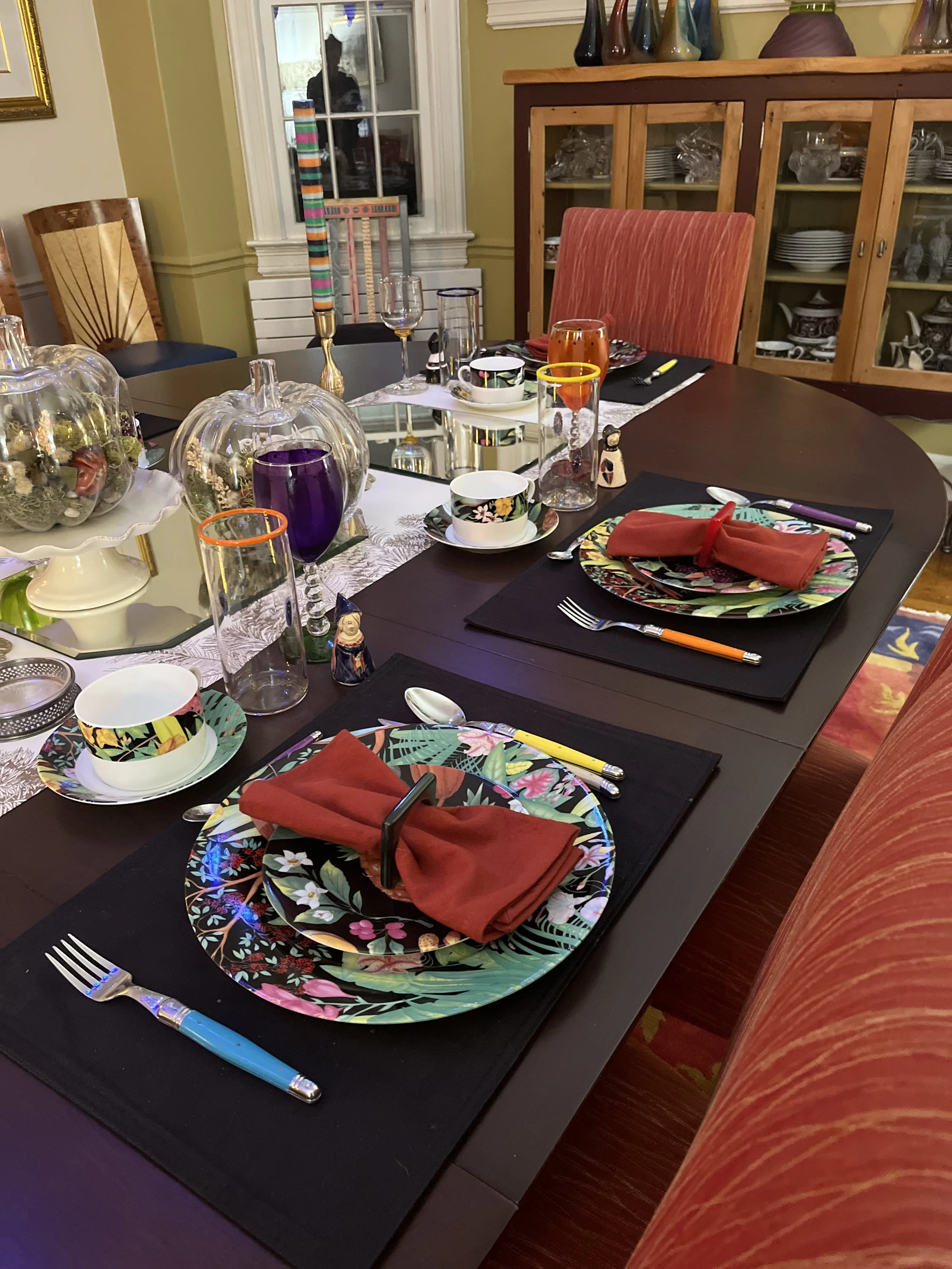
When The Washingtonian asked, in its October 2026 issue, “Is DC the Loneliest City in the Country?” I had to smile a little. Not because loneliness is funny, but because I've been thinking about this very question—and planning something to do about it—for quite a while.
The article didn't give me the idea. It did, however, give me a timely reason to talk about it.
Washington is full of fascinating people. People with interesting careers, strong opinions, remarkable experiences, and stories worth hearing. There are museums to explore, restaurants to try, lectures to attend, and enough professional events to fill several calendars.
But a full calendar isn't necessarily a full social life.
People move away. Children grow up. Work and family obligations take over. The routines that once brought us together disappear. And even when we want more connection, figuring out how to make it happen can feel surprisingly complicated.
So I'm done just thinking about it.
I'm setting the table.
Action absorbs anxiety. Let's do something.
I recently heard Scott Galloway use the phrase “action absorbs anxiety.” It's a simple idea that has stayed with me. When we're worried about something, taking a concrete step can help us move from feeling helpless to feeling that we have some agency.
I'm not suggesting that a dinner party cures loneliness, or that social isolation is something we can solve with a clever menu and a few extra chairs. But I do think there's a difference between wishing we had more connection and doing something to create it.
We can lament the disappearance of community. We can wonder why making friends as an adult seems so much harder than it once did. We can wait for someone to organize something, invite us somewhere, or introduce us to a new circle of people.
Or we can send an invitation ourselves.
I'm choosing the invitation.
I used to entertain. Then life happened.
I used to invite friends over much more often than I do now. In the early years of my life in DC, my book club met for dinner and drinks, rotating among members' homes around town. The gatherings gave us a reason to get together, catch up, and get to know one another better. We discussed our dating lives, then our spouses, then our exes, children, parents’ deaths, people’s moves, even the passing of a cherished friend.
Then came the knockout of COVID.
Like so many things, those dinners stopped. The routine disappeared, and even after social life resumed, some of our old habits never quite returned.
I suspect many of us have a version of this story. We get busy. We assume we'll see people soon. We tell ourselves we'll invite everyone over when the house is ready, the schedule clears, or we have the energy to cook something impressive.
Of course, life rarely becomes less complicated.
Somewhere along the way, entertaining can begin to feel like a production rather than an invitation. The house must be ready, the food must be impressive, and everyone must have a wonderful time.
I'm officially lowering the bar.
A gathering doesn't need to be perfect. It needs people willing to show up.
A New York idea that struck a chord
I've been encouraged to see other people experimenting with ways to create community, too.
In 2023, The New York Times published “The radical act of eating with strangers,” a story about Anita Michaud, who started Dinner With Friends after moving to New York and discovering that living in a city of millions didn't necessarily make meeting people easy.
Her idea was straightforward: invite people who didn't know one another to share a meal in someone's home. Give strangers a reason to gather, and see whether something develops.
I love the simplicity of that premise. You don't have to wait until you have a ready-made circle of friends. You can begin by bringing people together and letting the connections develop naturally.
And it isn't only happening in New York. From supper clubs to informal dinner parties, people are finding ways to meet beyond their usual social and professional circles.
Then there's Kara Swisher, who has talked about hosting a mahjong party and deliberately inviting people who didn't know one another. I particularly like that example because mahjong is already part of what I'm building through P.S. Nest. A shared activity gives people something to do together, takes some pressure off conversation, and creates room for unexpected connections.
The common thread isn't food or games. It's the willingness to create an opportunity for people to meet.
Making room for connection at P.S. Nest
This idea has been part of my thinking about P.S. Nest for a long time.
P.S. Nest began with the idea that our homes and lives should make room for the things that matter. Over time, that idea has grown beyond home organization into a collection of experiences designed around curiosity, culture, companionship, and connection.
Through Cultural Companions and private cultural experiences, I help people explore the museums, art, history, and unexpected treasures of Washington and its surroundings. Visiting Family Concierge offers another way to make time with visiting family more thoughtful and enjoyable. Mahjong brings people together around a game that encourages concentration, laughter, and camaraderie.
And now I'm adding something that feels both entirely new and completely natural: Gatherings in my home.
These offerings may look different, but they share a belief that we benefit from making room for experiences with other people. Sometimes that means discovering a museum you hadn't visited before. Sometimes it means learning a new game. And sometimes it simply means sitting around a table with people you might not otherwise have met.
I don't think every social experience needs a grand purpose. Sometimes spending an evening in good company is purpose enough.
Interesting people. Interesting conversation. Possibly delicious food.
I'm launching P.S. Nest Gatherings, a series of dinners at my home designed to bring interesting people together for interesting conversation.
This is not a professional networking event. There will be no elevator pitches, no exchanging business cards around the cheese plate, and no expectation that anyone leave with a strategic partnership.
I want to bring together people with different backgrounds, interests, experiences, and perspectives. Some may already know one other person. Most may arrive knowing only me. I'm especially interested in mixing circles rather than simply gathering the same familiar group.
What might happen when a longtime Washingtonian meets someone new to the area? When someone with an artistic eye finds herself talking to a person with a completely different professional background? When people discover a shared interest they never knew they had?
I have no idea. That's part of the fun.
I also want to be realistic about the food. I'm a better curator of people and experiences than I am a chef, but I will try. My official promise is interesting people, interesting conversation, and possibly delicious food.
I think that sounds like a pretty good evening.
Every other month, to start
My first Gathering is happening in another week.
I've been planning this series for a long time, so the timing of The Washingtonian article feels especially apt. It has given me a reason to talk publicly about something I've already wanted to do: create a welcoming space where people can meet, talk, and perhaps begin new friendships.
For now, I'm planning to host every other month. Depending on the response—and how the idea evolves naturally—I may eventually make it a monthly event.
I'm curious about what makes a gathering work. Is it the mix of personalities? The size of the group? The questions we ask? The willingness to step outside our usual conversational grooves?
I'm not going to overengineer it. The point is to create the opportunity and see what happens.
After the first dinner, I'll report back. I'll share what surprised me, what worked, what I'd change, and whether I think this is something worth continuing. I'm giving myself permission to experiment rather than expecting perfection on the first try.
There may be a little awkwardness. There may be a dish that doesn't turn out quite as planned. There will almost certainly be conversations that go somewhere I didn't expect.
That sounds like a good start.
An invitation to my DC friends—and to people I haven't met yet
If you're in the DC area and this sounds appealing, I'd love to hear from you. To my friends who haven't been to my house in far too long: consider this a nudge.
And if you're someone I haven't met yet who likes the idea of spending an evening with curious, interesting people, I'd love to hear from you, too.
I'm particularly interested in bringing different circles together. I often say this friend should know that one, why don’t they? The idea is to meet people, not simply to spend another evening with the people we already know.
You don't need a particularly impressive job, a fascinating anecdote prepared, or a professional reason to be there. Curiosity and a willingness to join the conversation are plenty.
If you'd like to be considered for a future P.S. Nest Gathering, get in touch through P.S. Nest. Tell me a little about yourself and what interests you. I'd love to start building a list of people who are open to meeting others and seeing where a conversation leads.
I can't promise that every dinner will produce a new friendship. I can't promise that DC will shed its reputation for loneliness. And I certainly can't promise a flawless meal.
But I can promise to make the invitation, put people around a table, and give connection a chance.
We spend a lot of time talking about how disconnected we feel. Maybe the next step is to do something about it.
P.S. If you don't live in Washington, I'd still love to hear what you're doing to bring people together where you are. Perhaps the best thing to come from these Gatherings will be inspiring someone else to set a table of their own.
After all, community doesn't appear by magic. Sometimes, someone has to start by saying, “Come over. Let's have dinner.”
